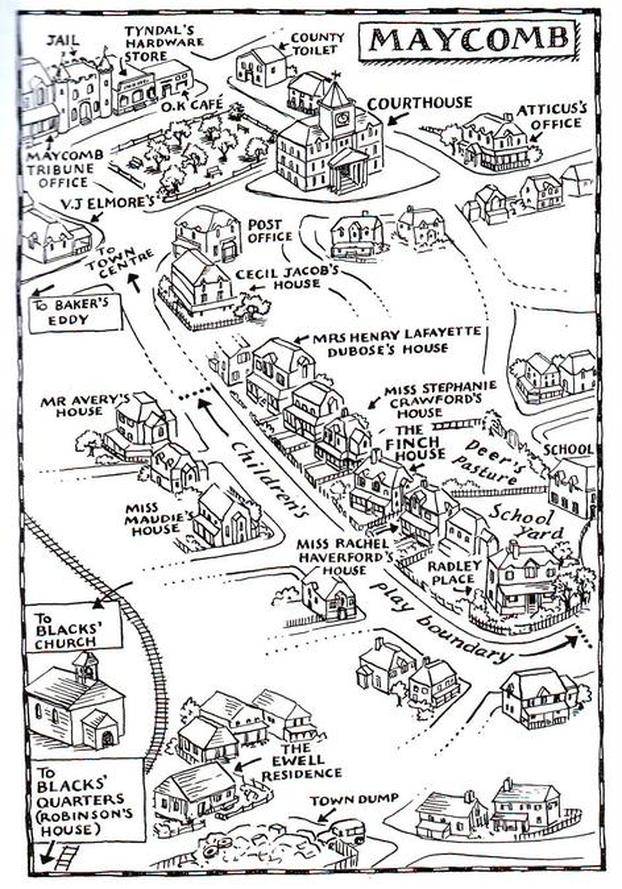
Map of Maycomb
This map of Maycomb helps readers visualize the setting of To Kill a Mockingbird, including key locations like the Finch house, the Radley house, and the courthouse.
Explore major characters, historical background, and key conflicts that help students understand Harper Lee’s classic novel with greater depth.
Start ReadingTo Kill a Mockingbird is often taught in Grades 9–11 because it develops students’ ability to analyze character, moral conflict, prejudice, justice, symbolism, and narrative perspective. Students learn not only what happens in the story, but also how Harper Lee uses Scout’s childhood point of view to reveal adult social problems.
This guide is designed to support reading, annotation, chapter summary, character analysis, symbolism, and writing practice.
This map of Maycomb helps readers visualize the setting of To Kill a Mockingbird, including key locations like the Finch house, the Radley house, and the courthouse.

Learn about the Great Depression and its impact on the setting and themes of To Kill a Mockingbird.
The Great Depression
Scout is the narrator and young daughter of Atticus Finch. Through her eyes, readers see both childhood innocence and the unfairness of adult society. Her perspective helps students understand how children gradually recognize prejudice, injustice, and moral courage.

Atticus is Scout and Jem’s father and a lawyer. He represents moral courage, fairness, calm judgment, and ethical responsibility. His defense of Tom Robinson shows students what it means to stand for justice even when society resists it.

Jem is Scout’s older brother. His changing view of Maycomb shows the painful loss of childhood innocence. As he matures, he becomes more sensitive to injustice and struggles to understand why unfairness exists.
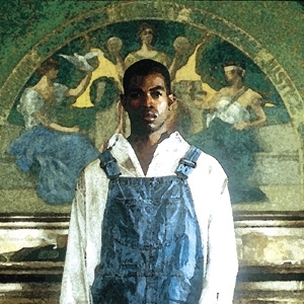
Tom Robinson is falsely accused of assaulting Mayella Ewell. His trial exposes racial injustice, social prejudice, and the limits of legal fairness in Maycomb. He is central to the novel’s criticism of racism and unequal justice.
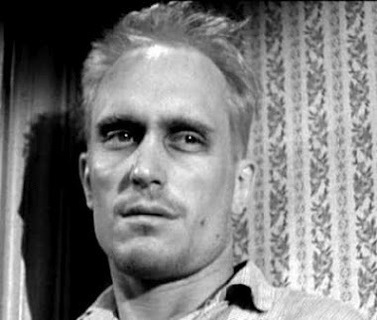
Boo Radley begins as a mysterious figure in the children’s imagination, but later becomes a symbol of misunderstood goodness and quiet protection. His character teaches students not to judge people only by rumors or appearances.
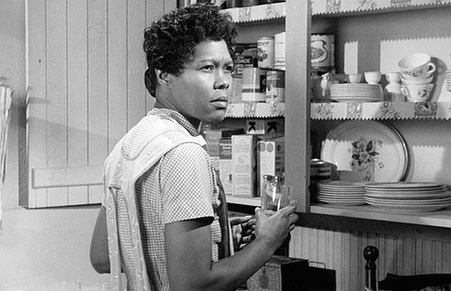
Calpurnia is the Finch family’s housekeeper and an important moral influence on Scout and Jem. She teaches discipline, manners, empathy, and respect while helping the children understand worlds beyond their own.
King Harold Godwinson was the last Anglo-Saxon king of England. In 1066, he fought William of Normandy at the Battle of Hastings. A famous tradition says Harold was struck in the eye by an arrow during the battle.
Historians still debate exactly how Harold died. Some accounts suggest an arrow wound; others suggest he was killed by Norman knights. The arrow-in-the-eye image became famous partly because of the Bayeux Tapestry.
The American Civil War lasted from 1861 to 1865. It was fought mainly between the Northern states, called the Union, and the Southern states, called the Confederacy. One of the central issues was slavery and whether it would continue or expand.
Although To Kill a Mockingbird takes place decades after the Civil War, the novel is shaped by the long aftermath of slavery, segregation, racial hierarchy, and social inequality in the American South.
Writing a reading summary helps you retain key details, analyze themes, and develop critical thinking skills. It encourages you to engage deeply with the text, improving comprehension and preparing you for discussions or essays.
Go to TemplateUse this page as a starting point for character analysis, historical context, symbolism, and evidence-based essay writing.
Reading Guide Questions Book a Reading Lesson